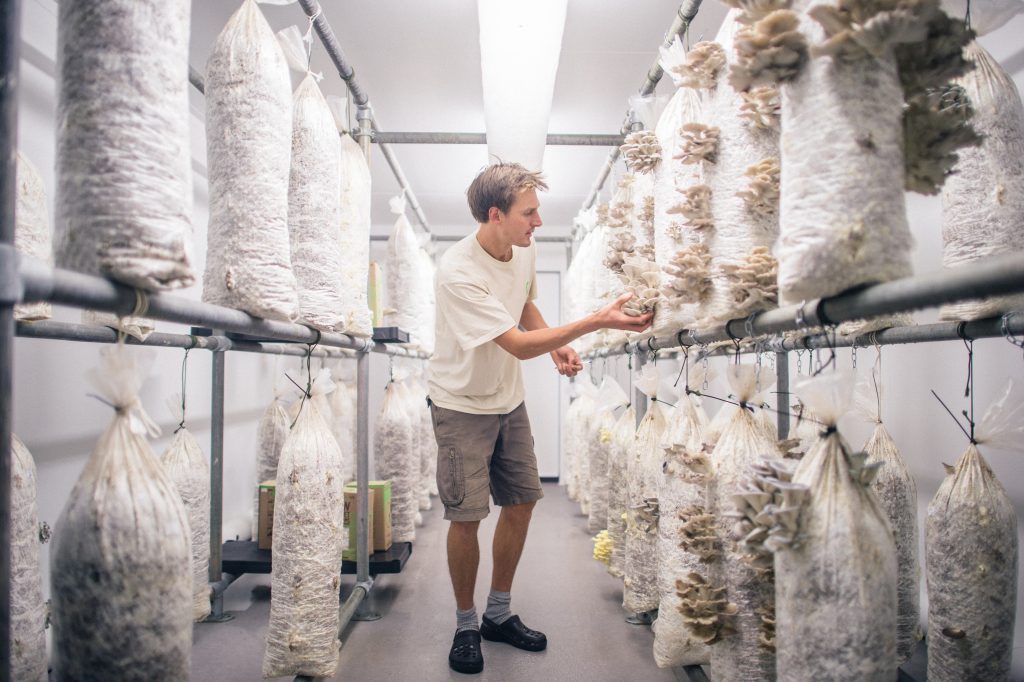
I started growing mushrooms in 2007 purely for fun.
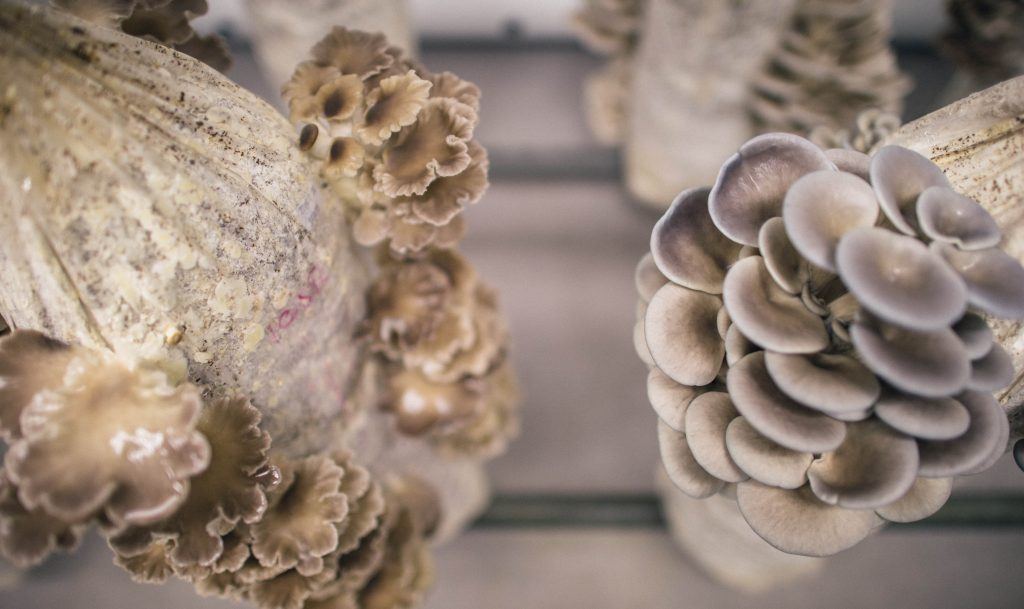
At the time it was just a hobby — something fascinating, slightly unusual, and deeply satisfying. Watching pink oyster mushrooms burst out of a bag for the first time felt like magic.
In 2009, I decided to try turning that hobby into a business. Not because I’d yet made an in-depth mushroom farming business plan, or was inspired by market research reports.
But because I wanted to be my own boss, grow food for a living, and contribute to local food production in my community.
My Dad told me I was being too idealistic and that I’d have to learn the hard way.
He was right… to some extent.
Starting a mushroom business is absolutely possible — but it’s not simple, and it’s not for everyone.
Over the last 15+ years I’ve:
- Built and run our own low-tech mushroom farm (rebuilt 4 times!)
- Supplied restaurants and local markets
- Worked as a consultant on multiple mushroom farm designs
- Trained thousands of growers worldwide
- Seen people succeed… and seen many give up
So when someone asks me: “Can you really make a living growing mushrooms?”
My honest answer is Yes — but it depends on your market, your labour efficiency, and the scale you start at. Small mushroom farms can work well when they sell locally (restaurants, markets, retailers) at a good price and build reliable repeat customers.
Success depends on many factors and of course, like any business, it can be difficult especially at the start – but yes it can absolutely work and I’ve seen plenty of mushroom businesses thrive over the last decade.
I often recommend starting smaller than most people imagine, in order to find your feet and do your learning before you scale up.
Mushrooms are a high-value crop. They grow quickly, and they require relatively little space.
Here’s a simple example to visualise scale:
To grow 10kg (22lbs) of oyster mushrooms per week, you typically need:
| Weekly Production | Growing space needed | Labour required |
| 10kg (22lbs) | 10m2 (108ft2) | 7-10 hours/week |
That’s enough to create meaningful side income if you sell at a good price per kg/lb — without betting your entire livelihood on it from day one.
In this guide, I’ll walk you through:
- The real costs of starting
- What makes mushroom farming profitable (and what doesn’t)
- The key steps to setting up a mushroom business
- The most common mistakes new growers make
- And what I wish I’d known before starting
How to Start a Mushroom Business (Step-by-Step)
Starting a mushroom business involves choosing the right crop, testing production on a small scale, and gradually scaling once you have buyers. Here’s a simple step-by-step overview:
- Choose which mushrooms to grow — start with fast, reliable varieties like oyster mushrooms.
- Decide how you’ll grow them — low-tech indoor setups are best for beginners.
- Test on a small scale first — prove you can grow consistently before expanding.
- Find buyers before scaling — restaurants, markets, and local customers.
- Calculate costs and profit — know your production cost per kilogram.
- Scale production gradually — increase volume only when demand exists.
- Improve systems and efficiency — refine workflow, hygiene, and growing conditions.
- Add other mushroom products — increase profits with grow kits, extracts and workshops.
Let’s break each of these steps down so you can see exactly what’s involved in starting a successful mushroom business
What’s Really Involved in Starting a Mushroom Business?
Through GroCycle we’ve helped thousands of people learn how to grow mushrooms at home and start small mushroom farms all around the world.
Starting a mushroom business sounds simple on paper: grow mushrooms, sell mushrooms, repeat.
In reality, the growers who make it work are the ones who understand that this is a systems business. You’re balancing production, timing, hygiene, and sales — and if any one of those falls behind, it affects the rest.
The good news is that small-scale mushroom farming can absolutely work. Mushrooms are a high-value crop, they grow quickly, and you can produce meaningful yields from a relatively small footprint. But whether it becomes a viable income depends less on the biology and more on the business fundamentals: labour, workflow, and customers.
1) Is Mushroom Farming Actually Profitable?
Small mushroom farms can be profitable, especially when selling directly to restaurants, farmers markets, or local retailers. Production costs are relatively low, but labour is often the biggest expense.
Most successful small farms start at a manageable scale (5–20kg per week) and build reliable customers before expanding production. Profitability depends more on consistent sales than on how many mushrooms you can grow.
There’s no doubt that mushrooms are one of the most profitable crops for small farms to grow. They fetch a high price per kg/lb, you can grow a lot in a small space, and you can be harvesting a new crop every week of the year.
But the biggest myth about mushroom farming is that profitability is mainly about production — that if you can grow a lot, you’ll automatically make good money.
Most people can learn to grow mushrooms. With enough space, time, and materials, you can usually increase production. The harder part is selling them consistently at a good price — especially at the beginning.
-> Read our guide on how much you can sell mushrooms for
Profitability also gets oversimplified. If you only look at “production costs” — straw or sawdust, spawn, bags, water, a bit of electricity — mushrooms can look like an easy win. Those input costs are often quite favourable.
Where the business tends to live or die, particularly for small farms, is labour.
Small farms are typically labour-driven rather than mechanised. So the real question becomes:
How much money is left after materials and running costs — and is it enough to cover wages (including your own time)?
That depends hugely on your personal situation. Someone paying high city rent or supporting a family with big outgoings needs a very different level of income for the same farm to “work” than someone with lower overheads — for example, a person later in life with a paid-off mortgage or an additional income stream.
Another common mistake is assuming you can scale a small spreadsheet model linearly. Scaling doesn’t behave like that.
As you grow more:
- your sale price per kilo/pound often drops (you drift toward wholesale markets)
- your production cost per kilo/pound may improve (more efficiency, less manual work per unit)
- your capital requirements rise (equipment, space, workflow upgrades)
And how you pay for those upgrades matters. If you scale using debt, repayments become another major factor in whether the operation is “profitable” in real terms.
So yes — mushrooms can be profitable. But the “profit” is not a single universal number. It’s the outcome of labour, sales channel, personal overheads, and how you scale.
2) How Much Does It Cost to Start?
This is one of the most liberating things about mushrooms: you don’t need a huge upfront investment to begin learning and testing the market.
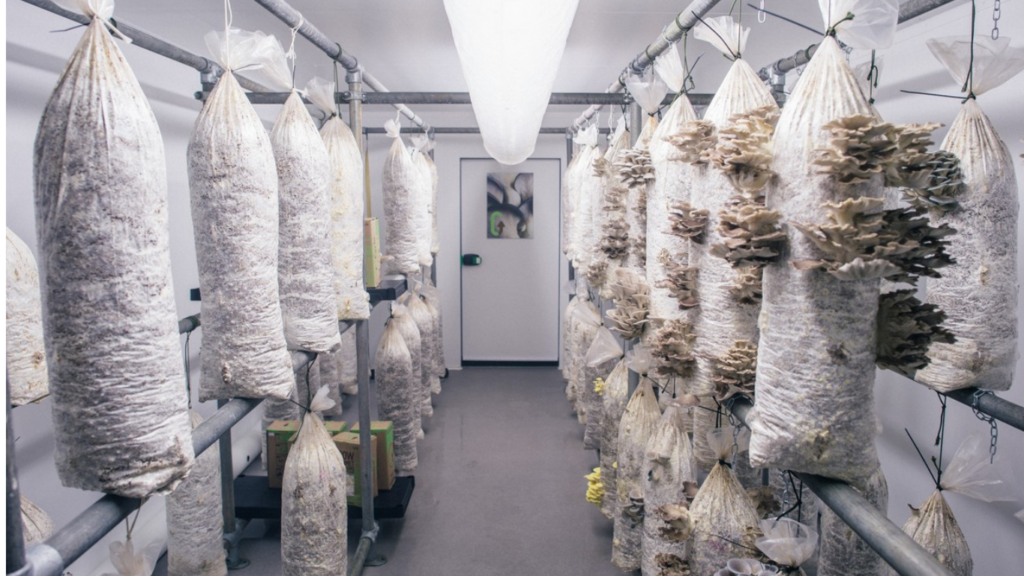
At the very smallest end, you can get started on a shoestring budget — roughly $100 to $500 — and still produce something meaningful. That might look like oyster mushrooms grown on pasteurised straw in buckets, with a very simple fruiting setup like a couple of four-tier greenhouse racks. If you’re willing to source materials second-hand and keep it simple, you can get moving fast.
A more realistic beginner setup — aiming for around 20 kg/week (44 lb/week) — is often in the region of $1,000 to $2,000. That gives you enough to build something a bit more reliable and repeatable without overcomplicating it.
If someone is semi-serious from the start and wants to build a dedicated setup to produce around 50 kg/week (110 lb/week) and begin producing their own substrate, then a more realistic starting range is $5,000 to $10,000.
Beyond that, costs can rise rapidly. There are plenty of farms that invest $50,000 to $100,000+, but that’s usually a scaling conversation, not a “starting out” conversation — and it comes with much higher risk if you haven’t yet proven production and sales.
The best pattern I’ve seen over and over is: start small, get consistent, build customers, then scale gradually when demand is pulling you forward.
3) How Much Space Do You Actually Need?
Space requirements depend on two things:
- how much you want to produce, and
- whether you’re making your own substrate or buying ready-colonised blocks.
At personal-consumption scale — say around 1 kg/week (2.2 lb/week) — you can be surprisingly compact. You might only need around 1 ft² (0.1 m²) of fruiting space for a small setup, or up to 4 ft² (0.4 m²) if you’re using something like a small four-tier greenhouse rack.
For a part-time, sideline business producing around 25 kg/week (55 lb/week), a realistic footprint for “doing the stages” can be around 16–25 m² (170–270 ft²).
If you step up toward around 100 kg/week (220 lb/week) with dedicated areas — a lab, incubation, fruiting room, substrate storage and prep space — you’re often looking at 45–50 m² (485–540 ft²) at least, and sometimes more depending on workflow and storage.
But here’s the big lever: substrate strategy.
If you buy ready-colonised blocks from a specialist supplier (which is increasingly common in the US and Europe), you can run a business with far less space because you mostly need a fruiting area. You’re basically turning your space into “cropping space” rather than splitting it across storage, mixing, bagging, sterilisation/pasteurisation, and incubation.
Producing your own substrate, on the other hand, requires additional space for:
- storing materials
- mixing/hydration
- bagging
- sterilising or pasteurising
- incubation
So if someone is limited on space and wants to maximise output from what they have, buying blocks is often the most efficient route — even if the blocks cost more than making substrate yourself.
4) Time Commitment: What Most People Underestimate
Most beginners underestimate how much time is spent on the unglamorous parts of the job.
People imagine the “sexy” parts: watching mushrooms pin, taking photos of beautiful clusters, harvesting. The reality is that a meaningful chunk of time goes into cleaning and hygiene — because hygiene is what protects your yields.
Harvesting itself can take more time than expected, and there’s also a learning curve around timing. Harvest too late and quality drops fast, shelf life shortens, and you end up with mushrooms that are harder to sell. Harvest too early and you leave yield on the table. It takes practice to dial that in.
What surprises a lot of people even more is the time spent communicating:
- finding customers
- following up
- confirming orders
- adjusting quantities week to week
- dealing with problems (when they happen)
- chasing invoices and payments
This isn’t a one-time thing either. Mushroom farming has a “constant cycle” feel to it.
You don’t need to be on the farm every hour of every day, but you do need to show up consistently — because crops move through stages and harvest timing often lands across multiple days.
Unless you have very stable (and usually more expensive) environmental controls, mushrooms won’t always fruit on a perfectly predictable schedule. That can mean harvesting across weekends, and it can make it harder to leave the farm for a few days without help.
One of the most practical advantages a small grower can have is a trusted person nearby who can step in to harvest when you’re not there.
5) Which Mushrooms Are Best to Grow Commercially?
For complete beginners, it’s very hard to beat growing oyster mushrooms as a starting point.
They’re forgiving, fast, and productive — and crucially, you can grow them on pasteurised substrate, which is usually simpler and cheaper than fully sterile production. That means fewer points of failure early on, and a much quicker path to producing mushrooms you can actually sell.
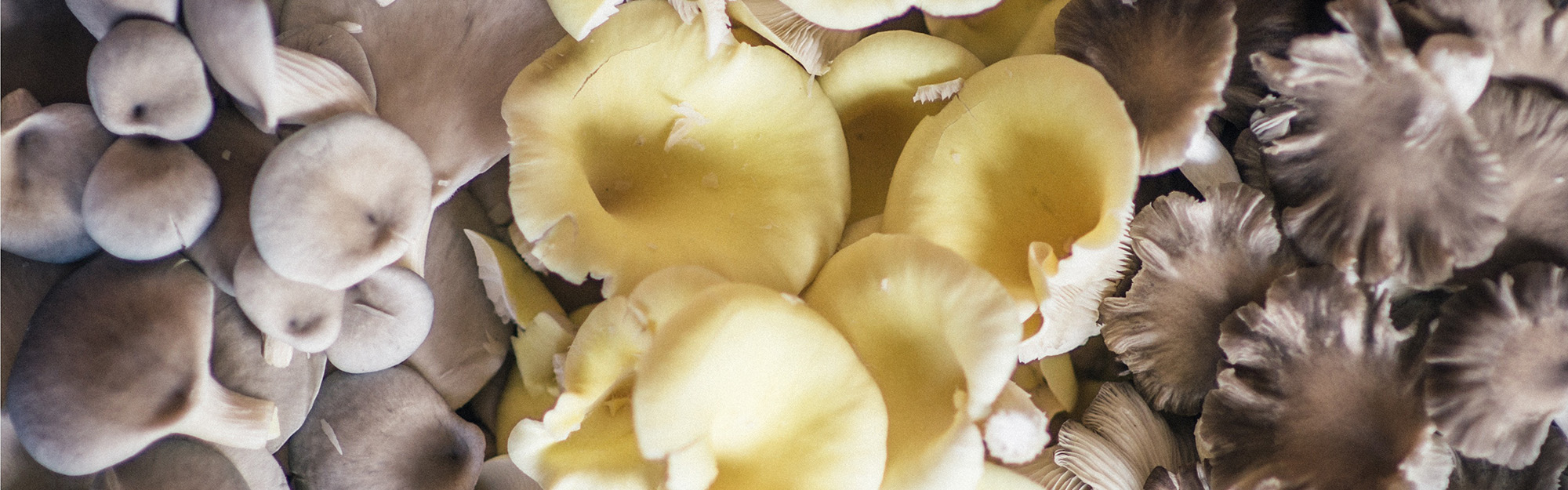
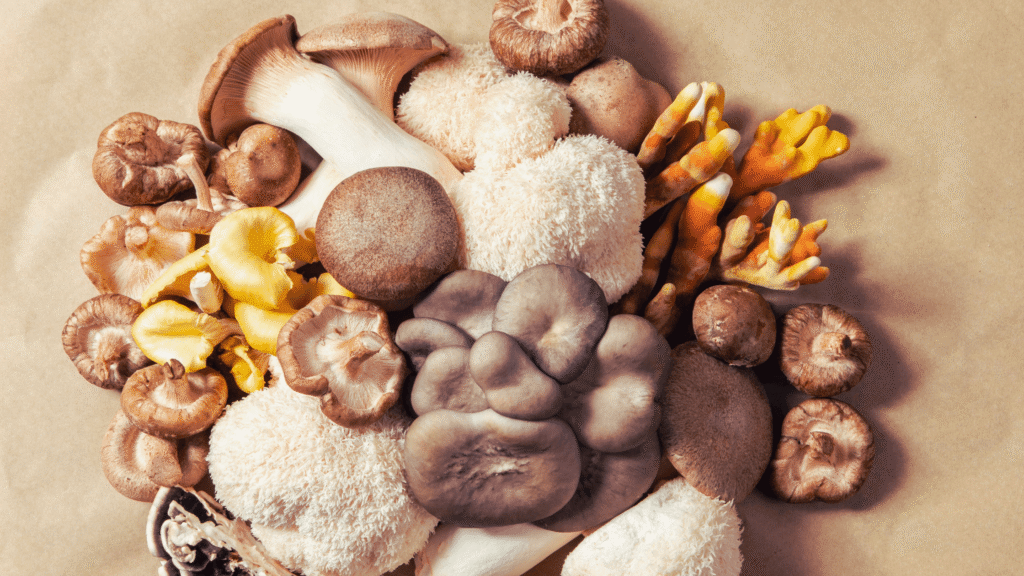
There are also plenty of oyster strains to work with — pinks, yellows, winter/summer strains, blues — which lets you offer variety without adding huge complexity.
The downside is that oysters are common and often fetch a lower price than some speciality varieties, so many small farms pair them with lion’s mane.
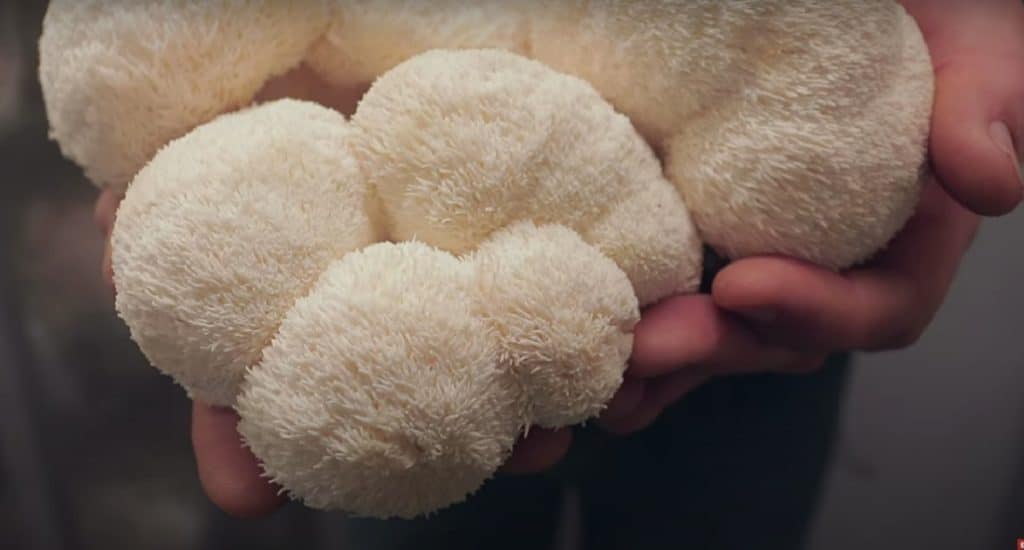
Growing Lion’s mane is still relatively approachable for new growers, it yields well, and demand has been strong — especially with chefs, and increasingly with home cooks because it works as a convincing meat substitute in certain dishes.
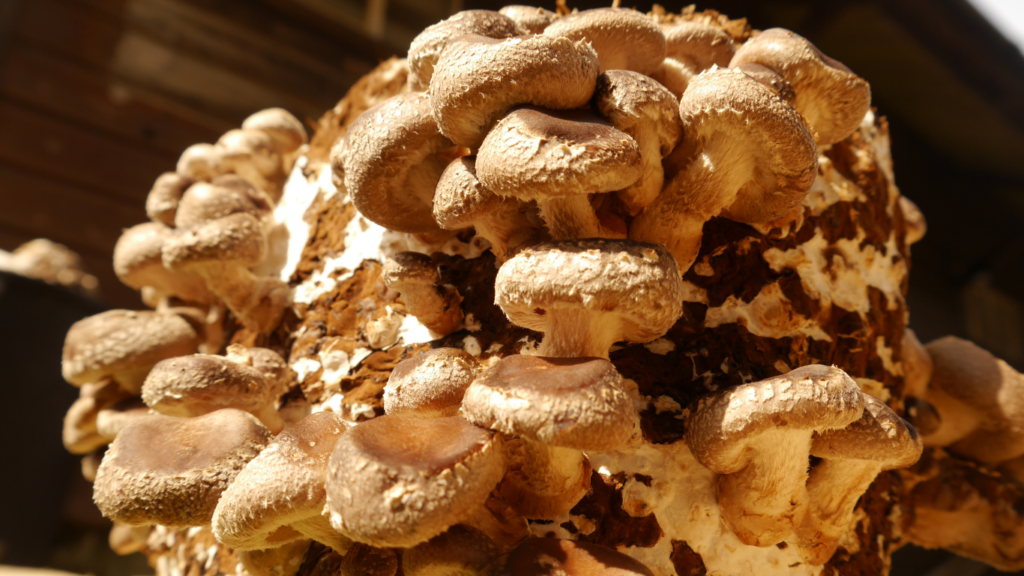
Growing Shiitake mushrooms can also be an excellent choice. It’s familiar to customers, has a great flavour, and one of its biggest strengths is shelf life — often two weeks or more when handled well. That gives you flexibility in sales and delivery.
But shiitake has a long incubation period — commonly 8–12 weeks — which can soak up a lot of space if you produce it yourself. For that reason, many small farms are better off buying shiitake as ready-colonised blocks and focusing on fruiting.
As for what to avoid early on: anything that’s difficult to grow consistently or has a tiny market.
Maitake, for example, is more complex and not a beginner-friendly commercial choice. And button mushrooms are generally a poor fit for small farms — that market is dominated by large industrial producers, and it’s almost impossible for a small grower to compete on price.
The real competitive advantage for small farms is not price. It’s:
freshness, locality, quality, and variety.
If you’re close to your market, you can harvest and deliver in a way that industrial supply chains simply can’t match. That’s what people will pay for.
A popular “small farm mix” these days is often:
oyster + lion’s mane + shiitake, with something like chestnut or pioppino as a fourth variety for interest.
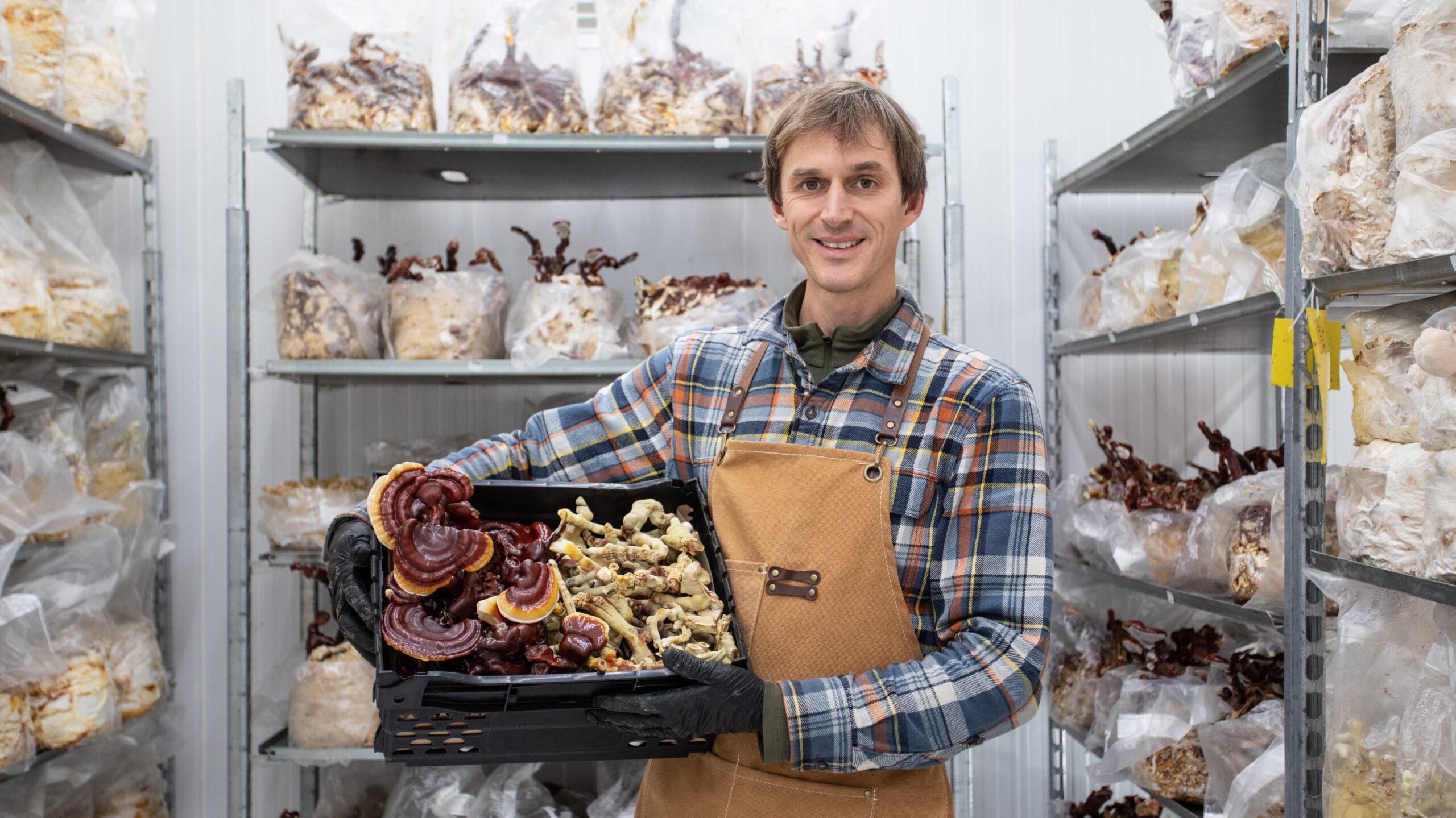
If medicinal production is part of the plan, reishi and lion’s mane are commonly approachable to start with, while more specialised varieties (like cordyceps) are often better bought dried from growers who specialise.
6) Selling Is Harder Than Growing
The hardest part of selling mushrooms is getting a clear commitment — especially from restaurants.
You’ll meet plenty of chefs who genuinely like the idea of local mushrooms. Some will love the product. Some will even accept the premium price because they understand quality, freshness, and local supply.
And then… they don’t order.
Often it’s not because they’re unwilling — it’s because they’re busy. Buying mushrooms from a local grower is rarely high on a head chef’s priority list when they can already get mushrooms from their wholesaler with one click.
On top of that, restaurants tend to work around menu cycles. If the menu is set for the season, many chefs are reluctant to change it mid-season. You might hear, “Let’s talk when we change the menu next season,” which could be weeks or months away.
This is where selling becomes a process, not a single conversation.
You need persistence, and you need follow-up.
A surprisingly important detail is contacting chefs at the right times. You’ll generally get better results if you catch them during quieter windows, such as:
- mid-afternoon after lunch rush (around 3pm)
- late afternoon before dinner service ramps up (often 5–6pm)
- late morning before lunch prep (around 11–12)
It also helps to leave something physical behind — a card, a small pricing sheet — so you’re not relying on them remembering your name in the middle of a chaotic week.
In my experience, selling mushrooms works best when it’s personal. Email alone is rarely enough early on. Face-to-face contact builds trust. Showing a chef the mushrooms, telling them briefly how you grow them, making a human connection — those things count.
If you want to take it further, inviting chefs to your farm can be a powerful move. A lot of chefs love getting out of the restaurant and seeing where food is grown. That relationship can turn a “maybe” into a long-term customer.
There’s also a production reality that catches new growers out: customers often want mushrooms on fixed days. A restaurant might want delivery every Thursday. A market is every Saturday. If your mushrooms aren’t ready when demand hits, it doesn’t matter how good they are.
New growers often underestimate how long it takes to dial in crop timing so you can reliably harvest what you need, when you need it.
Pricing, ironically, is the easier part. Most regions have fairly clear benchmarks and you can quickly see the “price ladder” in your area:
Direct-to-consumer tends to pay best (markets, veg boxes, local delivery), then retail shops, then restaurants, then wholesalers at the bottom.
That’s why I usually recommend new growers start with farmers’ markets and retail outlets. They’re more forgiving while you learn consistency. With restaurants, you can do better focusing on a couple of higher-end places ordering decent volume rather than trying to manage lots of small restaurant orders early on.
-> For more info on this topic read our guide on how to sell mushrooms to restaurants
7) When Does It Make Sense to Scale?
The most common scaling mistake I’ve seen is people trying to go big immediately.
They build a plan on a spreadsheet, put a lot of money into equipment and space, and then run into real-world problems they didn’t know existed — because they never learned at small scale first.
When something goes wrong at small scale, you lose a batch.
When something goes wrong at large scale, you can lose your business.
Scaling too early also tends to lead to buying equipment before you understand what you actually need. It’s very easy to spend money on machinery that turns out not to fit your workflow or your market — or to realise you would have invested differently once you understand the bottlenecks.
The right time to scale is usually simple:
When demand is consistently higher than what you can supply.
If customers are asking for more and you’re regularly selling out, that’s a clear signal.
But scaling doesn’t always mean producing more mushrooms.
Often it makes more sense to scale income through value-added products rather than multiplying the fresh mushroom pipeline — because increasing fresh mushroom output usually requires more space and labour.
Value-added products can sometimes grow revenue without the same proportional increase in workload.
For example:
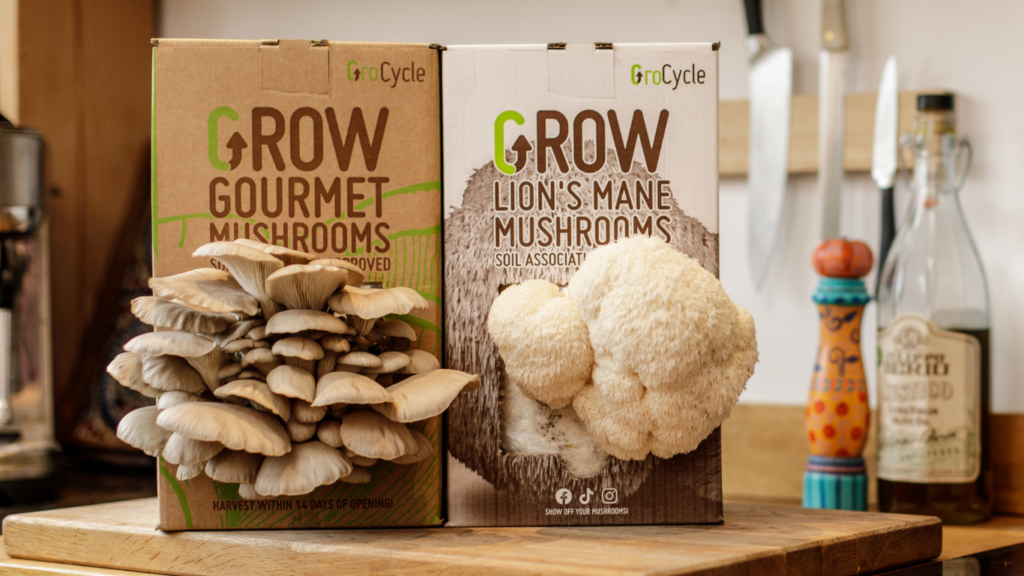
- Grow kits use the same incubation process as fresh mushrooms — but you skip fruiting and sell the block in a box.
- Extracts can increase the value you capture from medicinal varieties.
- Workshops and training monetise your experience and can be run locally, in schools, or through funded programmes.
These aren’t “easy” — they require different skills, especially if you move into e-commerce or product marketing — but they can be smart scaling paths once you have enough production knowledge and credibility.
8) Low-Tech vs High-Tech: What Actually Works?
Both low-tech and high-tech approaches can work. The real question is when they make sense.
I don’t recommend going high-tech right at the beginning, for the same reasons I wouldn’t recommend scaling too big too soon: it’s expensive, the learning curve is steep, and it increases risk before you’ve proven production and sales.
A better path for most people is:
start with a low-tech mushroom farm, learn the ropes, build customers — and then add complexity later.
Many growers naturally move toward more sterile processes as they expand or want to grow a wider range of mushrooms. That might involve building a lab, introducing pressure sterilisation (autoclaves), or upgrading climate control.
But “high-tech” isn’t one thing. It’s a spectrum.
At one end, you have huge industrial farms in places like the Netherlands, Japan, Korea, and China — millions of dollars of equipment, heavy mechanisation, and tightly controlled environments.
At the small-farm end, “high-tech” might simply mean investing in more stable climate control or bringing in a pressure steriliser so you can run a more sterile substrate process.
Between those extremes, there are hybrid options. A good example is atmospheric steam sterilisation systems (often called things like a “Bubba’s Barrel”), which can be a relatively low-tech way to sterilise substrate without the full complexity of pressure equipment.
So rather than thinking in binary terms — low-tech or high-tech — it’s more realistic to think of your farm moving along a gradient over time as you improve efficiency, lower production costs, and expand species.
Explore the Key Parts of Starting a Mushroom Business
Free Guides:
If you’d like to go deeper into specific parts of starting a mushroom business, we also have these guides which break things down further:
• Mushroom Farming Business Plan
• How Much Can You Sell Mushrooms For?
• How to Sell Mushrooms to Restaurants
• How to Set Up a Low-Tech Mushroom Farm
• Mushroom Farm Examples: What Does a Mushroom Farm Look Like?
• Urban mushroom farming
• Top 12 most expensive mushrooms
• Top 13 most profitable crops to grow
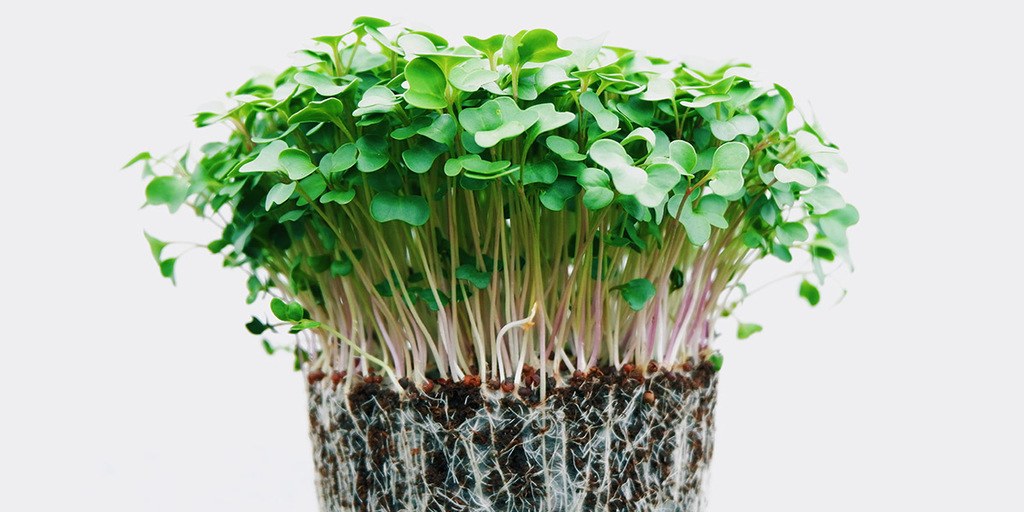
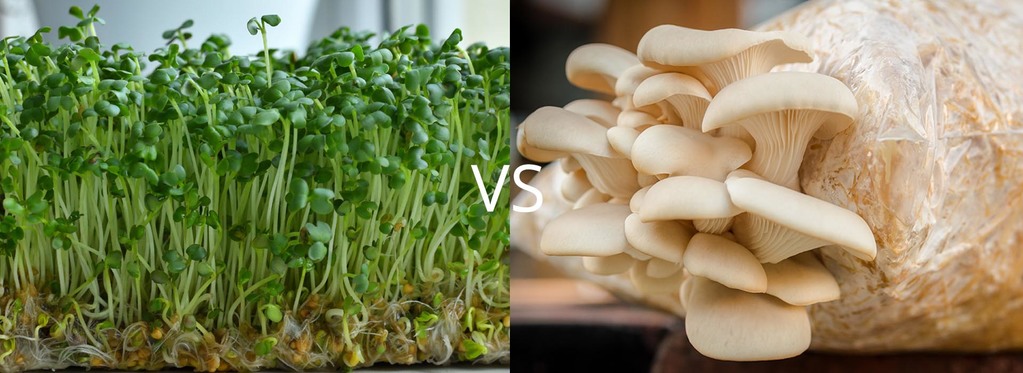
• Mushrooms vs Microgreens
What I Wish I’d Known Before Starting
When I started growing mushrooms commercially, there were a few lessons I had to learn the hard way.
Looking back now, these are the things that would have saved me the most time, money and stress early on.
1) You don’t need to grow mushrooms in an expensive sterile environment
When I first learned to grow mushrooms, I was told that you needed a sterile environment to do it reliably.
That meant sterilising substrate with heat and carrying out inoculation inside a clean room.
So I did exactly that.
I built a lab with multiple large pressure cookers and a laminar flow hood, and spent weeks learning sterile tissue culture techniques.
It felt like the “proper” way to do things.
Fast forward a few years, and I now know it’s absolutely possible to grow mushrooms without all of that.
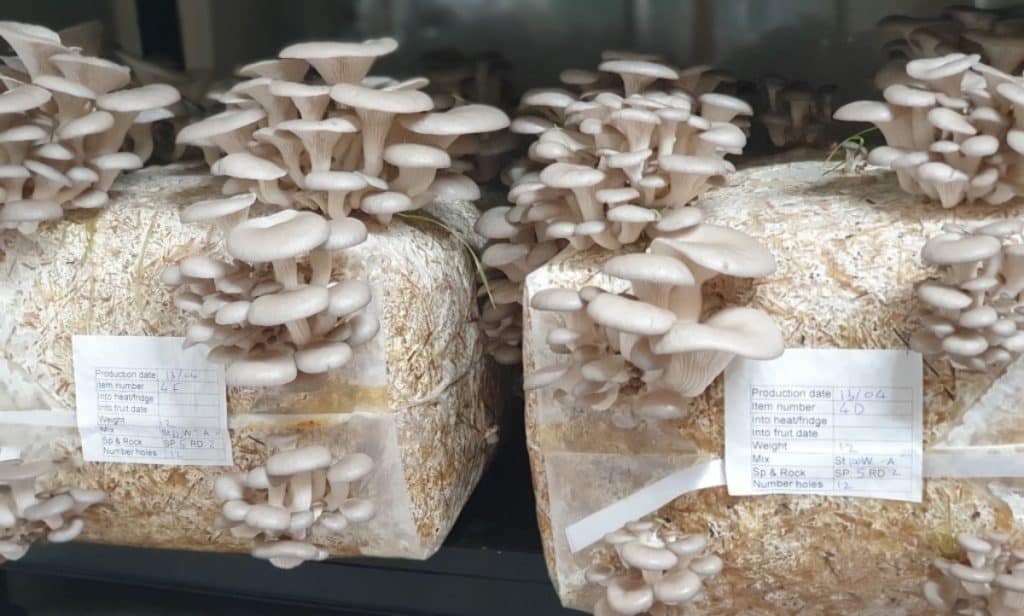
Many mushrooms — especially oyster mushrooms — can be grown successfully using pasteurised materials like straw, coffee grounds, or sawdust pellets.
These methods are far cheaper to set up, faster to get started with, and much easier to learn.
This realisation was a turning point for us, because it made mushroom growing accessible rather than intimidating.
My advice: start with low-tech methods like lime bath pasteurisation. If you later want to expand into more specialised varieties, you can always introduce sterile techniques when the time makes sense.
2) Producing your own spawn adds lots of extra time & cost
Early on, I didn’t just sterilise substrate — I also produced my own grain spawn.
That meant maintaining lab conditions, working with agar plates, and scaling cultures from petri dishes onto grain.
It’s fascinating work, but it’s also time-consuming and technically demanding.
As the farm grew, juggling spawn production alongside everything else became a bottleneck.
A couple of years in, Eric suggested we simply buy spawn from a specialist supplier instead.
We’ve never looked back.
It saved huge amounts of time and allowed us to focus on growing and selling — the parts that actually generate income.
And in most cases, the quality of professionally produced spawn is higher and more consistent anyway.
My advice: buy spawn in when you’re starting out. The extra cost is usually far outweighed by the time and complexity you avoid.
3) Growing mushrooms is very labour intensive
There’s no way around this.
Growing mushrooms — like any food production — involves a lot of hands-on work.
Large farms employ teams of harvesters for a reason.
On a small to medium scale, you’ll likely be doing everything yourself:
- Mixing substrate
- Moving grow bags
- Harvesting
- Packing
- Delivering
- Cleaning
Even when you enjoy the work (and most of it is genuinely satisfying), the workload can build quickly.
It’s easy to find yourself constantly trying to keep up.
My advice: start small with a low tech mushroom farm.
If you’re working alone, aim for no more than 5–20 kg (11–44 lb) per week until your systems run smoothly.
At that scale, you’re likely looking at around 10–20 hours of work per week — manageable enough to learn without becoming overwhelmed.
4) It’s a bad idea to do everything yourself
I definitely learned this the hard way.
Running a small mushroom operation involves many different moving parts:
- Sourcing materials
- Preparing substrate
- Inoculating
- Harvesting
- Delivering
- Cleaning
- Managing waste
Trying to do it all alone quickly becomes exhausting.
It also makes it hard to ever take time off, and decision-making can feel isolating.
Things became much more enjoyable — and sustainable — once my business partner Eric joined and we shared responsibilities.
My advice: find help early.
That might mean a business partner, occasional support from friends/volunteers, or collaboration with an existing local organisation.
Even part-time help can make the difference between a rewarding project and an overwhelming one. You’ll be surprised how many people would like to get involved and get stuck in alongside you.
5) Growing at the right scale is really important
It’s tempting to design your production scale on a spreadsheet.
We did it too.
The problem is that spreadsheets don’t capture the reality of day-to-day work.
Production isn’t linear. Each increase in output multiplies tasks:
- More substrate
- More handling
- More harvesting
- More deliveries
Before long, you can feel like you’re spinning multiple plates.
More mushrooms can mean more income — but they also mean more labour, more space, and more complexity.
My advice: grow at a scale you can manage comfortably.
Starting below 20 kg (44 lb) per week allows you to understand the workflow before committing to expansion.
And when you do scale, make sure it’s driven by real demand — not just hypothetical projections in a spreadsheet.
-> If you’d like to hear me talk about these learnings in more detail, then check out the YouTube video I made where I take a walk through the woods and discuss the lessons I’ve learnt over the years (this is our most watched YouTube video with more than 650,000 views!):
Frequently Asked Questions About Starting a Mushroom Business
Here’s a list of some of the most common questions I’ve had from beginner mushroom growers who are thinking starting a mushroom farm:
Can you start a mushroom business from home?
Yes. Many growers begin at home using simple setups like shelving units or small grow rooms before moving into dedicated production spaces.
What is the easiest mushroom to grow for profit?
Oyster mushrooms are usually the best starting point because they grow quickly, tolerate beginner mistakes, and can be produced using low-tech methods.
How long does it take to start selling mushrooms?
You can often produce your first sellable crops within 4–8 weeks, but building reliable customers usually takes longer.
Do you need a lab to start a mushroom farm?
No. Many successful small farms begin using pasteurised substrates or ready-colonised blocks before introducing sterile production later.
Is mushroom farming scalable?
Yes — but scaling often makes more sense through efficiency improvements or value-added products rather than simply producing more fresh mushrooms.
How profitable is mushroom farming?
Mushrooms are one of the most profitable crops you can grow, but profitability depends heavily on labour costs, market access, and scale. For small farms, managing time and selling effectively often matters more than production costs.
Conclusion & Next Steps
I hope these lessons don’t put you off growing mushrooms.
The intention is the opposite — to help you avoid some of the mistakes we often see made early on.
In my experience, small to medium scale production (5–50 kg / 11–110 lb per week) is a fantastic way to grow a high-value crop for local sale without the process becoming overwhelming.
It works well as:
- A side-line business
- A part-time income stream
- A community food project
It can be done in a relatively small space, with modest setup costs, and — importantly — it can be deeply satisfying.
You get to grow something living, contribute to your local food system, and offer produce that’s fresher than anything shipped in from elsewhere.
And that’s a rewarding position to be in.
If you want to make this your full time business, then that’s certainly possible too – but make sure you’ve learnt your lessons on a smaller scale first before scaling up to ensure you don’t just scale up all the beginner mistakes. Know what you’re doing, make sure you have demand, and consider adding in value-added products as part of the mix.
If you want to find out more about setting up a mushroom business, then download our free guide to setting up a low tech mushroom farm: